
Home / For Organizations
Corporate Leadership Training Programs for Organizations
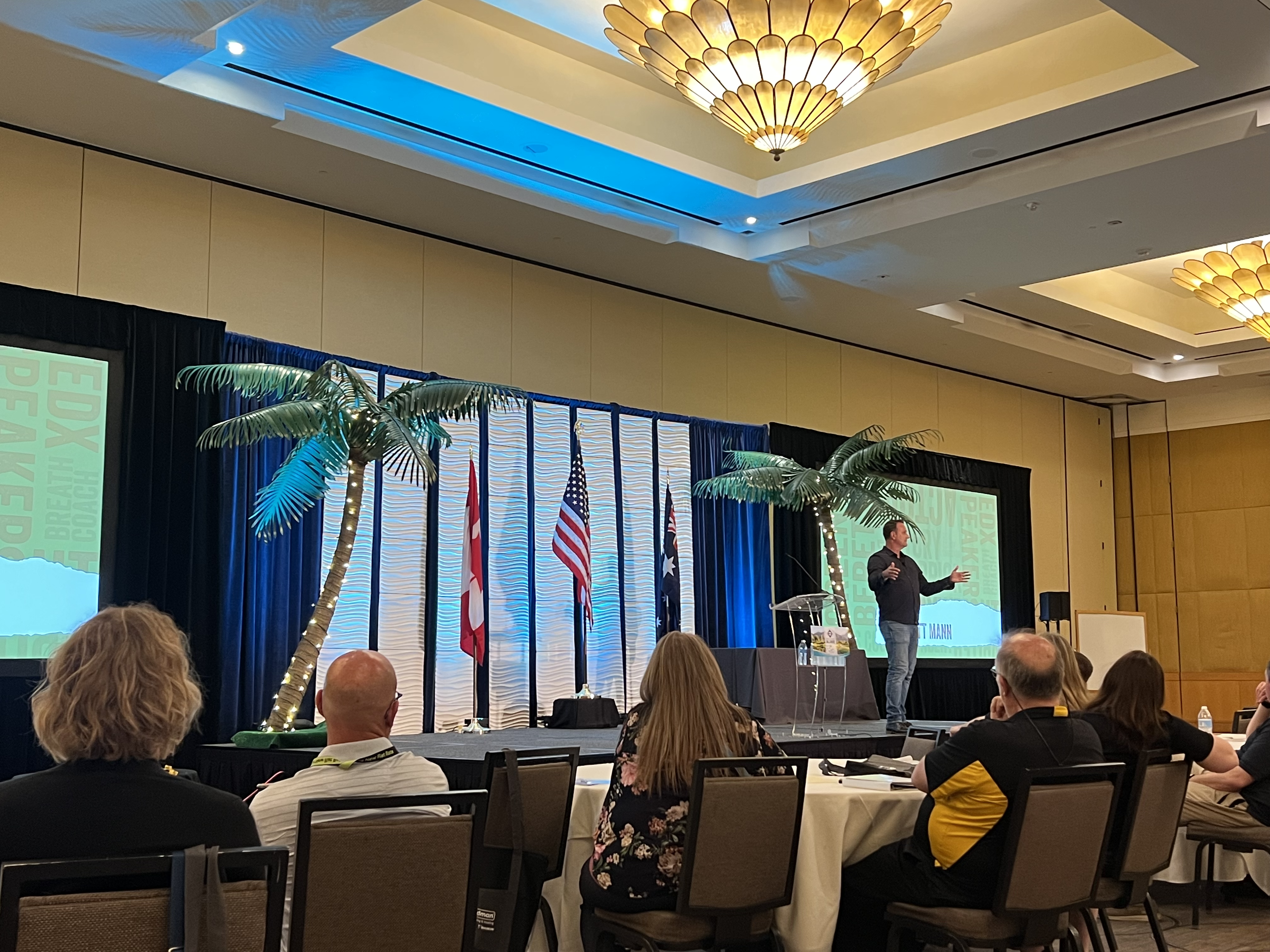
Scott Mann builds corporate leadership training programs for organizations that need people to believe their leaders again. He spent 18 years as a Green Beret earning trust in places where it started at zero. Today he teaches leaders to earn it in boardrooms, conference halls, and member meetings.
His work centers on one skill most leadership programs skip: telling the story that makes people lean in. These corporate leadership training programs build that skill in the leaders your people watch most.
Why Leadership Training Has to Start With Trust
Gallup’s State of the Global Workplace 2026 report puts global employee engagement at 20%. Manager engagement fell five points in one year, to 22%. Gallup estimates low engagement costs the world economy about $10 trillion in lost productivity.
Scott calls the cause the Trust Recession. Inside it sits the Churn: Distraction, Disengagement, Distrust, and Disconnection, hitting your people at once. AI disruption adds another layer, because people can no longer tell what’s real or who wrote it.
Most leaders answer that with more slides and more updates. Scott takes the opposite route. He warns leaders that handing their message to a machine means “outsourcing your agency and your point of view.” His line for the alternative: “A pro never sacrifices original thought.”
What Scott Saw at One CEO’s Vision Rollout
Scott once sat in on a multi-day leadership conference in Washington, D.C. The CEO opened by rolling out a complex, aggressive vision that would need buy-in from the most junior associate.
He read his slides in a monotone. Within two minutes, about 90% of the 40 or so people in Scott’s line of sight had their phones out. Scott calls that communicating “from the neck up.” Afterward, the CEO told himself it went fine.
Most change efforts stall right there, between what leaders think happened and what the room felt. Scott’s training starts at that exact spot.
Ways to Bring Scott Into Your Organization
Corporate leadership training programs come in more than one shape. Some organizations need one talk that resets the room. Others need leaders who can carry the message after Scott leaves. Choose the format that matches the change you’re leading.
| Format | Best for | What it looks like | How to start |
|---|---|---|---|
| Keynote | Conference openers and closers, leadership summits, member events | A talk customized after Scott researches your audience | Book through Scott’s speaker bureau |
| Workshops & Consulting | Leadership teams facing a merger, culture shift, or leadership change | Custom work inside your organization, scoped after discovery | Request a proposal from Scott’s team |
| Rapport Coach for teams | Teams that need trust at the sales table and with each other | Rapport training built on story, for groups | Ask Scott’s team about current options |
If one talk is the right first step, you can book Scott for a keynote. For custom work, explore Workshops & Consulting, or see how Rapport Coach works for teams.
What Scott’s Corporate Leadership Training Programs Include
No two engagements look the same, because no two rooms carry the same goals and pain. Scott builds each corporate leadership development program around what your leaders face right now. Depending on your goals, it can include the elements below.
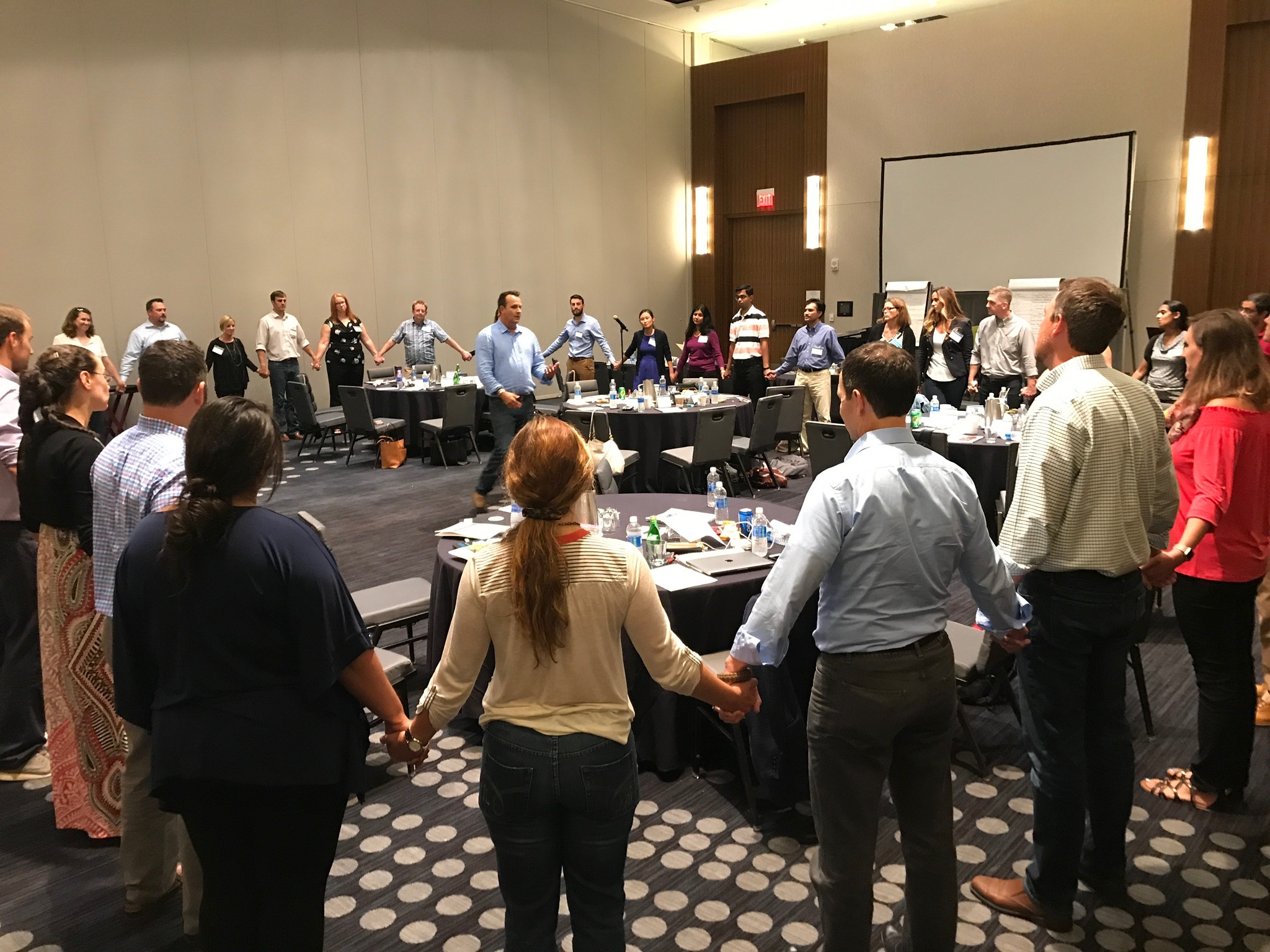
Discovery with your leaders: conversations that surface what your people want and what’s wearing them down.
Observation in the real setting: Scott watches your leaders communicate in their element. Then he returns with notes on where the message breaks.
One-to-one communication: high-stakes conversations with clients, donors, boards, and direct reports. Green Berets call these key leader engagements.
One-to-many communication: all-hands meetings, board presentations, town halls, and conference stages.
Story-based delivery: techniques like narrative wrapping. You open with a story, pause it, deliver your content, then close the story.
Preparation drills: breathing, movement, and focus work that helps leaders metabolize tension before they walk in.
Coaching for senior leaders: private work with the executives who act as their organization’s storyteller-in-chief.
This mix turns executive communication training into something leaders use the next morning. Leadership training for executives works best when the senior team goes first and the rest of the organization sees it.
Built for Leading Through Change
Change management leadership gets tested hardest during a merger, and that’s where corporate leadership training programs earn their keep. People fill every silence with their own story, and it’s rarely a hopeful one.
Scott has watched it happen. When leaders skip the narrative, he says, employees supply their own: “Oh, here we go again. This is how I lost my job last time.”
His trust work has been tested in rooms like these:
| Situation | Organization | Scott’s role |
|---|---|---|
| Merger | CompCo Steel-Quaker | Trust work through the merger, with the outcome confirmed by Chairman Greg Smith |
| Merger and leadership development | Capital One | The Emerging Leader Development Program, plus trust work during the Capital One-Discover merger |
| Merging cultures | Cisco-TD Synnex | Rebuilding trust between two organizations becoming one |
| Disruption during and after COVID | Re-Employability and EOS | Navigating the Churn as conditions shifted |
| Organizational and leadership change | Fannie Mae, BDO, Fox Entertainment | Leadership change work |
One bank hired Scott to close a year of leadership training after a merger. Before the talk, he pictured a single attendee. He named her Susan, a mid-level executive wondering whether she’d still have a job. Every story he chose had to reach her.
You can see results from past programs, or read more on leading teams through change.
Who Scott’s Corporate Leadership Training Programs Serve
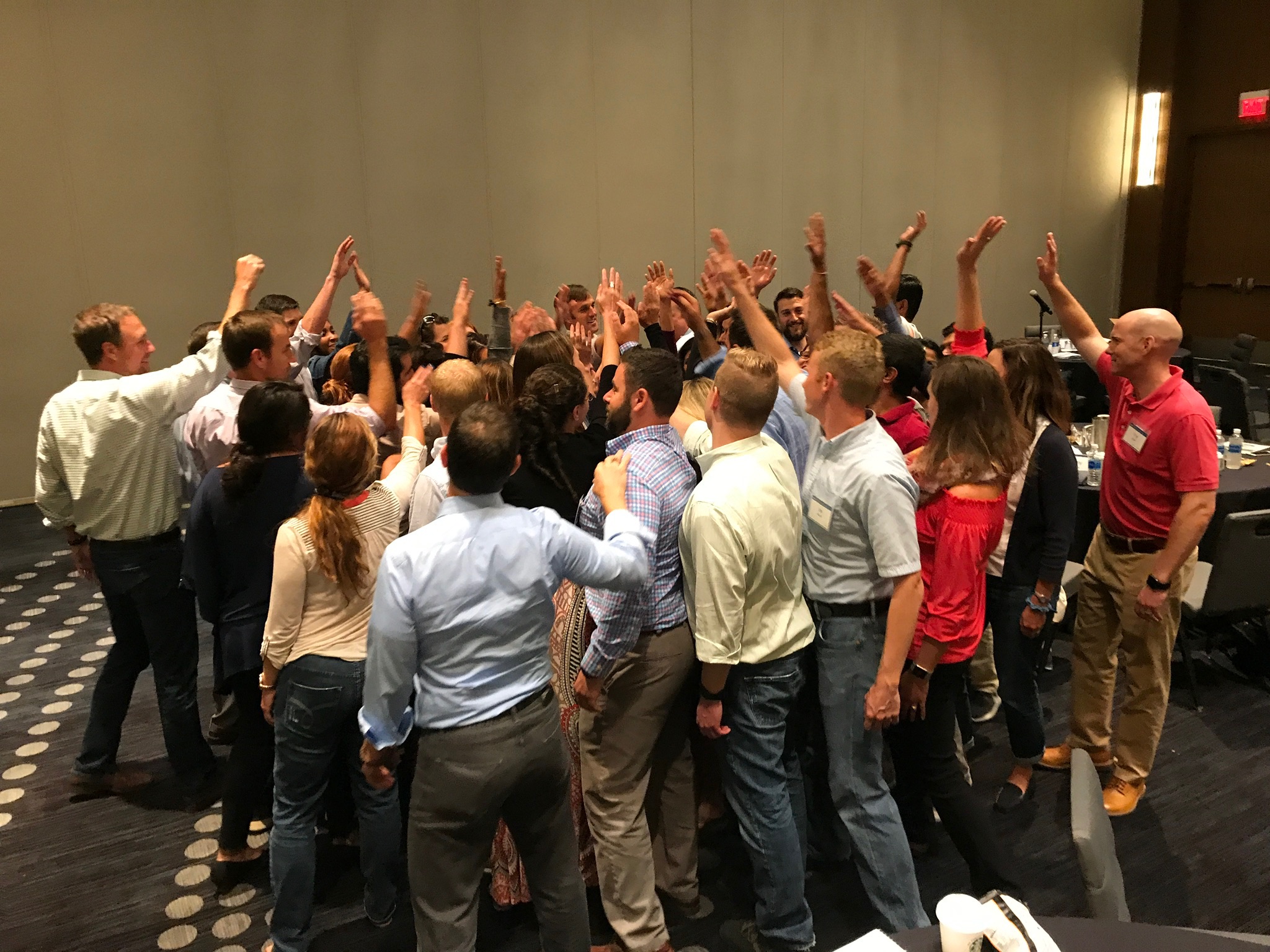
Scott does his best work with leaders who can act on what they hear. That includes association members, mastermind members, and leadership teams who own their outcomes.
Associations and mastermind organizations: association leadership training for members, chapter leaders, and boards who run their own businesses.
Senior leadership teams: leadership training for executives who must carry a vision, merger, or restructuring to their people.
Emerging leaders and associates: leadership development for associates moving into their first real influence, like Capital One’s emerging leaders.
Nonprofits and public sector teams: leaders who depend on donors, boards, and partners to trust them.
He has worked across banking, finance, healthcare, IT, housing, real estate, and financial advisory firms. Associations he has spoken to range from boiler manufacturers to cleaning products groups.
Why Story Works Where Slides Don’t
The brain makes sense of the world through story. Scott leans on narrative researcher Dr. Kendall Haven, who defines a story as “a character-based narration of a character overcoming obstacles to reach an important goal.”
Give people data without that arc, and they build their own story to explain it. During change, that story usually turns against you. Give them a leader’s honest struggle, and they find their own place in the plan.
Scott learned this first in Afghanistan, sitting across from tribal elders who had every reason to distrust him. He later turned it into Rooftop Leadership, his original talk and training for leading when trust is low. You can explore Scott’s approach to trust-building, or read Scott Mann’s background.
How You’ll Know the Training Worked
Most training teams measure results with the Kirkpatrick Model. It tracks four levels: reaction, learning, behavior, and results. Story-based corporate storytelling training shows up at each level in specific ways.
| Kirkpatrick level | What to look for |
|---|---|
| Reaction | Phones stay down. People lean in and ask questions during sessions. |
| Learning | Leaders can build a short story that carries a business message. |
| Behavior | Leaders open meetings, rollouts, and client calls with story instead of slides. |
| Results | Movement in engagement surveys, talent retention, member renewals, and deal flow. |
Agree on two or three of these measures before any corporate leadership development program starts. That gives you a baseline and a clear read on return when it ends.
How to Start a Program With Scott
Every engagement starts with a conversation about your people and the change ahead. From there, Scott’s team routes you to the right path.
Share your goals. Tell Scott’s team about the change, the group, and what you need leaders to do differently.
Get routed. Keynotes go to Scott’s speaker bureau. Workshops & Consulting, as well as the team programs can be booked through Scott’s team.
Review your proposal. You get a scope built around your goals, your timeline, and how you’ll measure results.
Questions
Before you reach out
What is included in a corporate leadership training program?
Each corporate leadership training program is built after discovery, so the mix depends on your goals. It can include observation of your leaders, one-to-one and one-to-many communication training, story-based delivery work, and preparation drills. Senior leaders can also get private coaching.
How long does a corporate leadership training program take?
Length depends on the format and the change you’re leading. A keynote is one session. Workshops and consulting are scoped in your proposal, from a focused session to ongoing work.
What is the cost of leadership training for a company?
Cost depends on scope, group size, location, and format. Keynote fees come through Scott’s speaker bureau, while custom programs are quoted by Scott’s team. Share your goals to get a proposal built for your organization.
Can leadership training be customized for our industry?
Yes. Every program starts with discovery into your people’s goals and pain, so the stories and examples fit your world. Scott has worked with banking, healthcare, IT, real estate, financial advisory, and association audiences.
What is the difference between a keynote and a leadership training program?
A keynote is one talk that moves a room and sets its tone for the event. A leadership training program builds skill over time through practice, feedback, and coaching. Many organizations start with a keynote, then add training for their leaders.
How do you measure ROI on leadership training?
Start with the Kirkpatrick Model’s four levels: reaction, learning, behavior, and results. Pick two or three business measures before the work begins, like engagement scores, retention, or renewals. Comparing them before and after shows the return.
Is leadership training available for both associates and senior executives?
Yes. Scott coaches senior executives one-on-one and trains emerging leaders, including through Capital One’s Emerging Leader Development Program. Many organizations train the senior team first so the rest of the company sees the change modeled.
Give Your Leaders a Story Worth Following
Your people are waiting to see whether this change is real. Leaders who can tell its story, honestly and in their own words, are the ones they’ll follow. Tell Scott’s team what you’re facing, and they’ll build the program around it.